Preserving Your Smile's Future After Tooth Extraction
Tooth Extraction with Socket Bone Grafting
Finding out that a tooth cannot be saved due to severe trauma, a deep fracture, or advanced decay can be difficult news to hear. When a tooth must be removed, it is natural to focus on the extraction itself. However, what happens immediately after the tooth is gone is just as important for your long-term oral health.
At Harmony Cosmetic Dentistry & Implants, we practice forward-thinking care. By performing a socket bone graft (also known as socket preservation) following a gentle extraction, we fill the empty space with a specialized mineral matrix that helps slow the collapse of your jawbone and support a stable foundation for a future dental implant.
The moment a tooth root is removed, the surrounding jawbone loses its natural stimulation. Without a root to support, the empty socket walls begin to shrink and flatten over time. A jawbone can lose 40 to 60 percent of its width and height within the first year following an extraction, which can leave the bone ridge too thin to support a dental implant down the road.
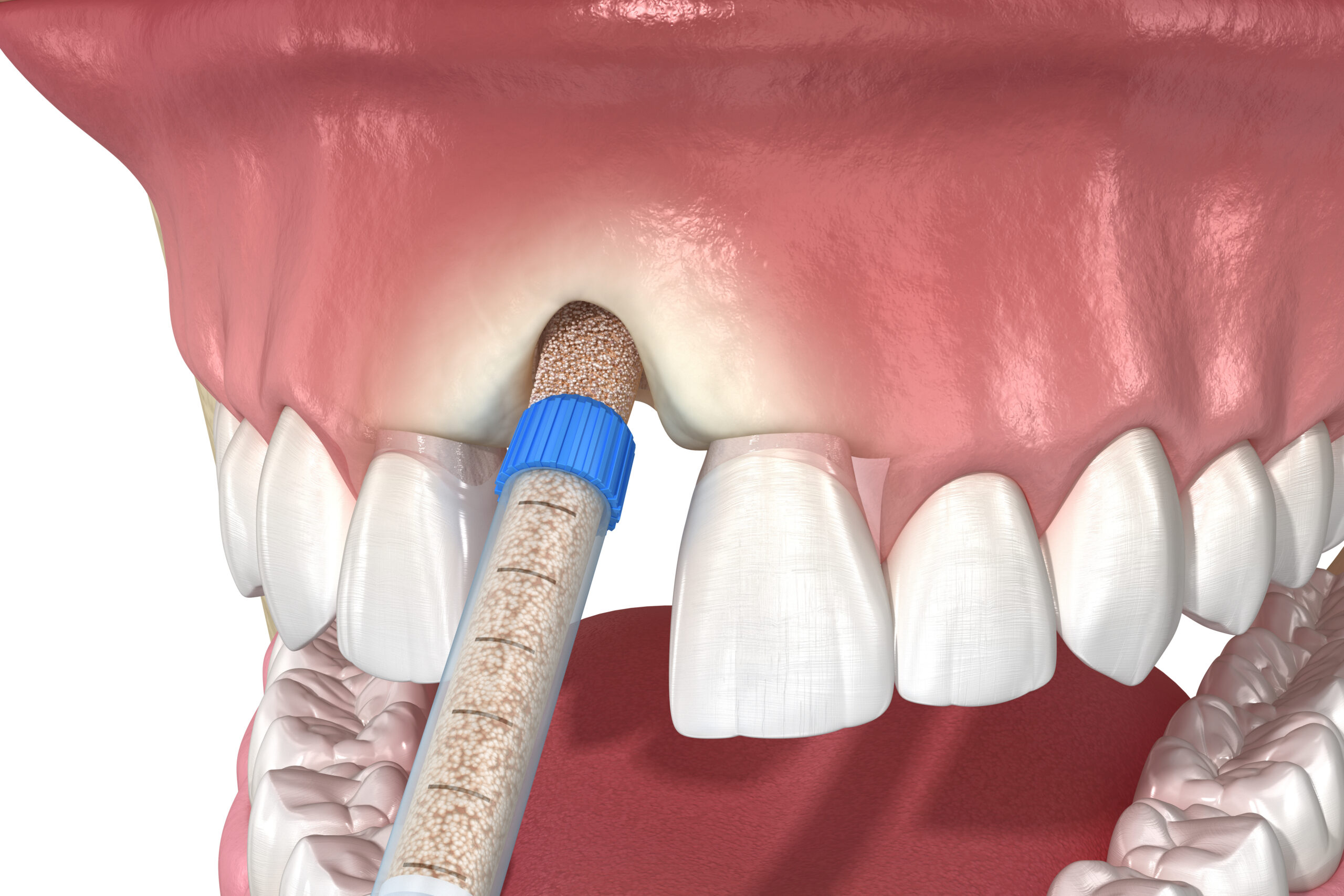
A socket bone graft places material directly into the extraction site to help preserve the shape and volume of the bone while it heals.
Acts as an internal scaffold, helping hold the natural shape, height, and width of your bone ridge in place while the socket heals, reducing the need for more invasive bone rebuilding later.
Keeps Your Implant Options Open
If you choose not to get a dental implant right away, a socket graft helps preserve your options for the future, so the bone foundation needed for a permanent implant will still be there when you are ready.
Protects Neighboring Teeth
By keeping the extraction site stable and well-supported, a socket graft helps prevent the bone around your neighboring teeth from weakening, shifting, or losing the support they need to stay firmly in place.
How Socket Bone Grafting Works
Many patients are surprised to learn that the grafting material does not remain in the jaw permanently. Here is what happens during a typical socket bone graft:
Step 1: Gentle Extraction
Dr. Haider uses micro-surgical extraction techniques to lift the failing tooth from the socket with minimal pressure, helping keep the surrounding bone walls intact.
Step 2: Placing the Graft
The empty socket is filled with a specialized mineral matrix that acts as a scaffold, helping preserve the shape and volume of the surrounding bone.
Step 3: Protecting the Site
A dissolving barrier membrane is placed over the graft to keep fast-growing gum tissue out, giving the slower-growing bone the time it needs to rebuild.
Step 4: Natural Bone Regrowth
Over the next three to four months, your body’s natural healing cells travel across the graft material, gradually replacing it with your own living bone.
Protect Your Smile's Future
Losing a tooth doesn’t have to mean losing the bone that supports the rest of your smile. Placing a socket graft at the time of your extraction is a simple step that can help protect your jawbone and keep your options open for the future.
Please contact our practice to schedule an evaluation and find out whether socket bone grafting is right for you.